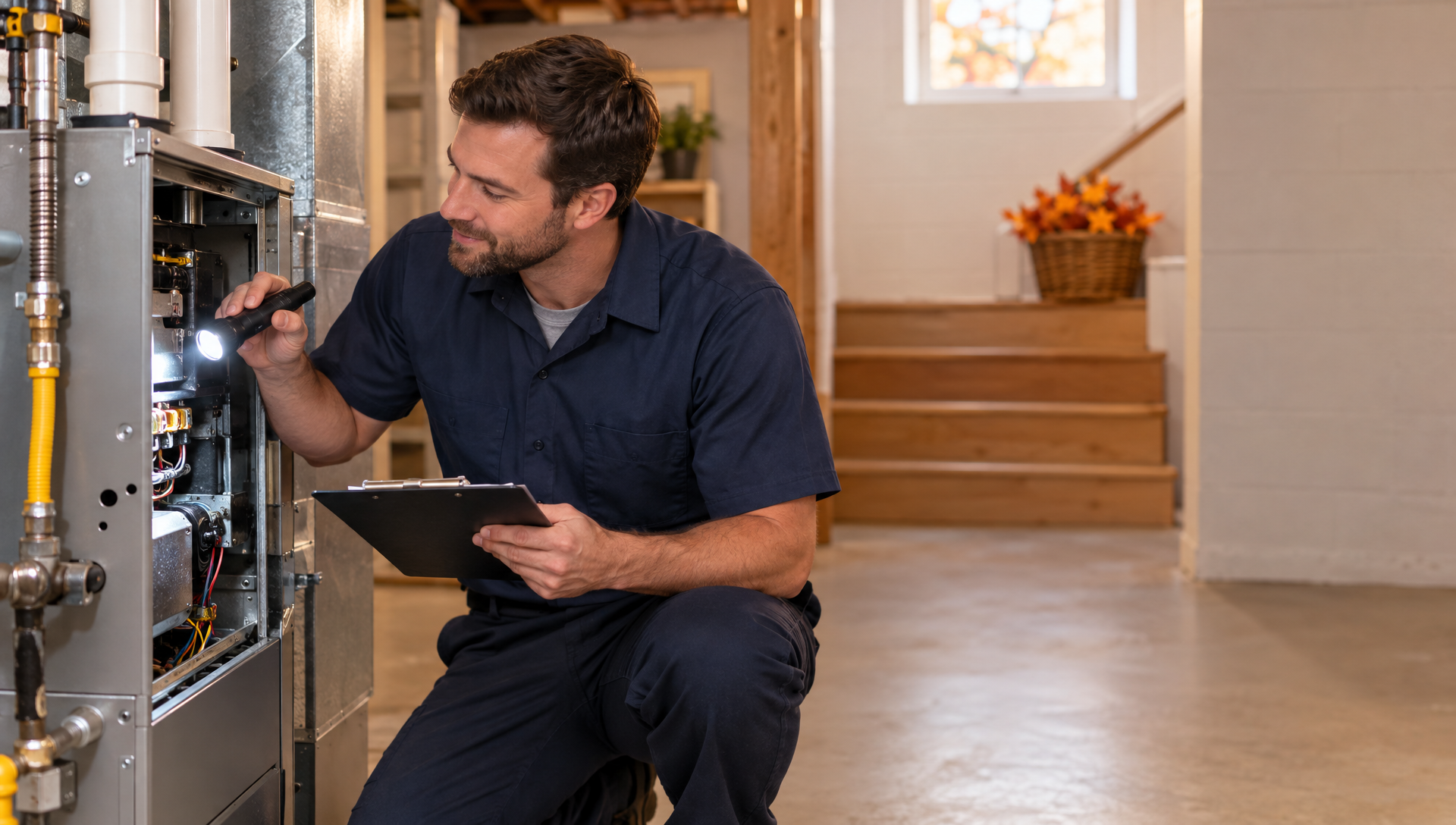
Fall is the ideal time to schedule furnace maintenance. Booking your service before the first cold snap means you’re not waiting in line with everyone else when the temperature drops, and it gives your system the best chance to run reliably through the coldest months. Here’s why a fall furnace tune-up matters, what it involves, and when you should book it.
When Should You Schedule Furnace Maintenance for Fall?
The short answer: schedule it in September or early October, before temperatures consistently drop below freezing and demand spikes. Getting ahead of the rush means shorter waits for appointments and a technician who has the time to be thorough.
Why Fall Is the Best Time for Furnace Maintenance
1. Avoid the Winter Rush
When the first cold front hits, every furnace in the neighborhood seems to act up at once. Booking your maintenance before peak season means you won’t compete for appointments. If you’re already dealing with problems, our guide on what to expect from a furnace repair visit walks you through the process.
2. Catch Small Issues Early
A tune-up can catch minor problems before they become costly emergency repairs. Cold weather is exactly when parts like the limit switch and ignition system tend to show their age.
3. Keep Your System Efficient
A properly maintained furnace runs more efficiently, which means lower energy bills and better heat distribution. Simple maintenance like cleaning the flame sensor keeps your system working like it should.
What a Professional Furnace Tune-Up Includes
- Inspecting and cleaning the flame sensor and burners.
- Checking the heat exchanger for cracks and carbon monoxide risk.
- Testing safety controls like the limit switch.
- Reviewing the blower motor and burner smell for combustion issues.
- Checking for short cycling, which often points to deeper problems.
- Making sure your system is sized correctly for your home.
Signs Your Furnace Needs Attention Before Winter
Don’t wait for a breakdown. If you notice the furnace short cycling or turning off on its own, schedule maintenance promptly. A furnace that smells like it’s burning should be inspected before use.
How to Prepare Your Home for Heating Season
Alongside your furnace tune-up, take time to prepare the whole home for fall — including checking your winterization checklist so your plumbing and heating are ready for cold weather. A water heater check and leak inspection round out a thorough fall prep.
Frequently Asked Questions
When should I schedule furnace maintenance for fall?
Ideally in September or early October, before peak heating season. This lets you beat the winter rush and catch issues before they become emergencies.
How often should a furnace be serviced?
Once a year is the standard recommendation, typically in the fall before heating season. Homes with older systems or heavy use may benefit from annual checks plus a spring check.
What does furnace maintenance include?
A professional tune-up typically covers cleaning the flame sensor and burners, inspecting the heat exchanger, testing safety controls, checking the blower motor, and reviewing for short cycling or combustion issues.
Is fall furnace maintenance worth the cost?
Yes. It improves efficiency, reduces the risk of mid-winter breakdowns, and can extend the life of your system — often paying for itself in avoided repairs and lower bills.
Sources
- U.S. Department of Energy — Furnaces and Boilers
- ENERGY STAR — Heating & Cooling
- Environmental Protection Agency — Indoor Air Quality