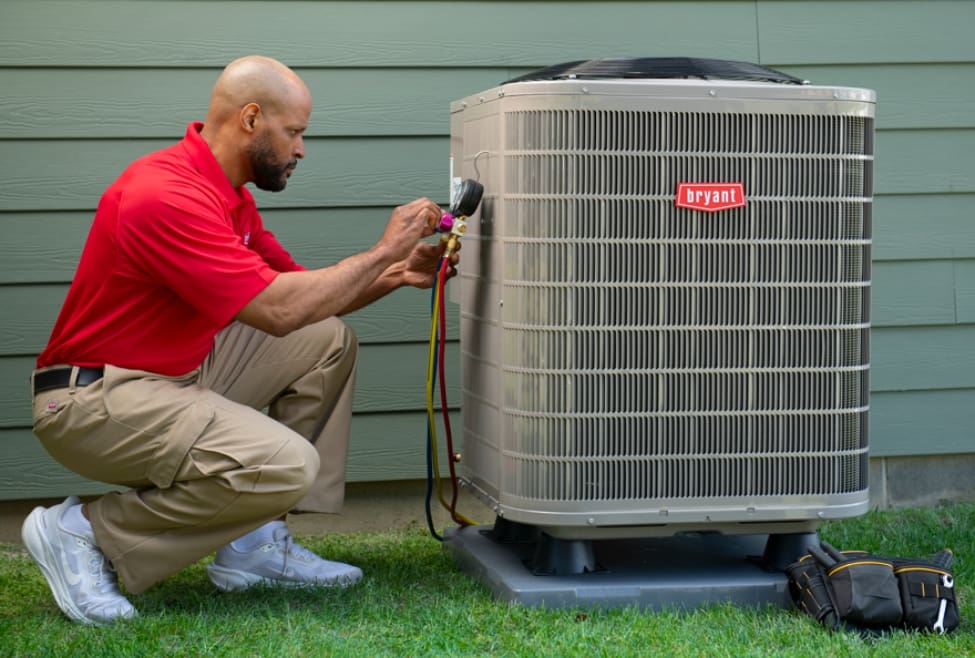
Understanding Low Refrigerant in Your Air Conditioner
If you have been asking, how do I tell if my AC is low on refrigerant, the answer often starts with changes in comfort inside your home. Refrigerant is the substance your air conditioner uses to absorb heat and remove humidity from indoor air. When refrigerant levels drop, your system can no longer cool efficiently, causing longer run times, weak airflow, and rising utility bills.
Unlike fuel, refrigerant should not simply run out. In most cases, low refrigerant means your system may have a leak that requires professional AC repair. Identifying the symptoms early can help prevent larger damage to your air conditioning system.
Common Signs Your AC Is Low on Refrigerant
Several symptoms can point to a refrigerant issue in your cooling system.
Warm Air from the Vents
One of the most noticeable signs is warm or room-temperature air coming from your vents even when the thermostat is set to cool. Low refrigerant reduces the system’s ability to remove heat from your home.
Longer Cooling Cycles
If your AC seems to run constantly without reaching the desired temperature, low refrigerant may be forcing your system to work harder than normal.
Ice on the Refrigerant Lines
Frozen evaporator coils or ice buildup on refrigerant lines can happen when refrigerant pressure drops too low. This often signals a refrigerant leak.
Hissing or Bubbling Sounds
A leaking refrigerant line may create hissing or bubbling noises near the indoor or outdoor unit.
Higher Energy Bills
Because your system runs longer to cool the home, low refrigerant often leads to increased electricity usage.
Why Low Refrigerant Is a Serious Problem
Low refrigerant does more than reduce comfort. It can also damage important components such as the AC compressor, which is one of the most expensive parts to replace. When refrigerant levels remain low for too long, the compressor can overheat and fail.
Prompt HVAC service can help locate leaks, restore proper refrigerant levels, and protect your cooling system from costly repairs.
What Causes Refrigerant Loss?
Refrigerant does not disappear under normal conditions. Common causes include:
- Small pinhole leaks in refrigerant lines
- Corrosion in copper coils
- Loose fittings or connections
- Factory defects in older systems
- Vibration over time damaging line sets
A licensed technician can perform AC leak detection to find the exact source of the problem before adding refrigerant.
Can You Add Refrigerant Yourself?
Many homeowners wonder whether they can simply refill refrigerant. However, refrigerant handling requires specialized tools and EPA-certified training. Adding refrigerant without fixing the leak usually creates a temporary solution and may worsen system performance.
Professional air conditioning repair service ensures the system is tested, repaired, and recharged correctly for long-term efficiency.
How Professionals Diagnose Low Refrigerant
When a technician inspects your system, they may:
- Check refrigerant pressure levels
- Inspect coils for leaks
- Use electronic leak detection tools
- Test cooling performance
- Evaluate compressor operation
- Verify airflow and thermostat settings
This full AC diagnostic service helps confirm whether low refrigerant is causing your cooling issues.
Preventing Refrigerant Problems
Regular maintenance can help catch problems before they worsen. Homeowners can reduce risk by:
- Scheduling annual AC maintenance
- Changing air filters regularly
- Keeping condenser coils clean
- Monitoring cooling performance
- Addressing strange noises early
Preventive service can extend equipment life and improve efficiency during peak summer temperatures.
Local Cooling Services You Can Trust
Lochard HVAC, Plumbing, and Service provides professional air conditioning repair, refrigerant leak repair, and AC maintenance for homeowners in Piqua, Troy, Sidney, Bellefontaine, Wapakoneta, and Tipp City, OH.
Our team helps homeowners restore comfort while protecting the life of their cooling systems.
Know the Signs Before Cooling Problems Get Worse
Knowing how do I tell if my AC is low on refrigerant can help you act before a minor issue becomes a major repair. Warm air, frozen coils, unusual noises, and higher energy bills often point to a refrigerant problem that should not be ignored. Addressing these signs quickly can improve comfort and prevent damage to your air conditioning system.
If your air conditioner is not cooling properly, contact Lochard HVAC, Plumbing, and Service for professional AC refrigerant diagnostics, leak detection, and air conditioning repair to restore reliable comfort.
FAQs
Can I just add refrigerant to my AC?
You can add refrigerant to an air conditioner, but simply topping off refrigerant usually does not solve the real problem. If your system is low, there is often a refrigerant leak somewhere in the coils or refrigerant lines. Adding more refrigerant without finding the leak can lead to repeated cooling problems and possible AC compressor damage. A professional AC refrigerant service includes leak detection, proper repair, and a correct refrigerant recharge.
Will AC stop working if refrigerant is low?
Yes, an air conditioner can stop working properly when refrigerant is too low. Low refrigerant can cause weak airflow, warm air from vents, frozen evaporator coils, and longer cooling cycles. In severe cases, the system may shut down completely to protect the compressor. Addressing low refrigerant in AC systems early can help prevent larger air conditioning repair costs.
How do I check my AC refrigerant level at home?
Most homeowners cannot accurately check AC refrigerant levels without specialized gauges and training. Refrigerant pressure must be measured while the system is running and compared to manufacturer specifications. Some warning signs of low refrigerant include ice on the lines, poor cooling, and hissing sounds. For a precise diagnosis, a licensed technician should perform a full HVAC system inspection.
How often do you need to add refrigerant to your AC?
Under normal conditions, you should not need to add refrigerant to your AC system at all. Refrigerant operates in a sealed system and is meant to last for the life of the equipment. If refrigerant levels drop, it usually means there is a leak that needs repair. Routine AC maintenance can help identify small leaks before they become major cooling issues.
What is the most common cause of low refrigerant in an AC system?
The most common cause of low refrigerant in an AC system is a refrigerant leak. Leaks often develop from corrosion in copper coils, loose fittings, vibration in the refrigerant lines, or wear over time. Even a small leak can reduce efficiency and strain the compressor, making early AC leak repair important for long-term system performance.
If your air conditioner is showing signs of low refrigerant, contact Lochard HVAC, Plumbing, and Service for professional AC leak detection, refrigerant service, and cooling system repair to restore comfort and efficiency.