What’s Really Behind Low AC Cooling Performance
If you’re searching how to add refrigerant to your AC, it usually means your system is no longer cooling the way it should. The air may feel warm, the system might run constantly, or you may notice ice forming on the lines.
It’s a logical assumption that the fix is simply “adding more refrigerant.” However, in most modern air conditioning systems, that’s not how they are designed to work. Refrigerant is sealed inside the system and does not get used up like fuel. When levels are low, something else is wrong.
Lochard HVAC, Plumbing, and Service often sees this situation during routine AC diagnostics, and in most cases the real issue is a leak or system restriction—not a shortage that can be safely topped off.
What Refrigerant Actually Does
Refrigerant is what allows your air conditioning system to move heat out of your home. It absorbs heat from indoor air, carries it outside, and releases it through the condenser.
Without the correct refrigerant level:
- Heat cannot be removed efficiently
- Cooling performance drops significantly
- The system may freeze or overheat
- The compressor can become damaged over time
So when refrigerant is low, the entire cooling process becomes unbalanced.
Can You Add Refrigerant to Your AC Yourself?
Technically, refrigerant handling requires EPA certification and specialized tools. That alone makes it something homeowners should not attempt. But more importantly, simply adding refrigerant without fixing the cause leads to recurring problems.
Here’s what usually happens if someone “tops off” refrigerant without repairs:
- Cooling temporarily improves
- The system leaks again
- Performance declines quickly
- The compressor runs under stress
- Eventually, a major breakdown occurs
Modern HVAC systems are sealed. If refrigerant is low, it escaped somewhere.
What You Should Check First
Before thinking about adding refrigerant, it helps to rule out simpler causes that can mimic refrigerant problems.
1. Airflow Issues (Most Common Misdiagnosis)
Restricted airflow can feel like a refrigerant problem. Check:
- Dirty air filter
- Blocked vents
- Closed return registers
- Dirty evaporator coil
Poor airflow can even cause a frozen coil, which looks similar to low refrigerant symptoms.
2. Outdoor Unit Condition
Your AC condenser needs clear airflow to release heat. If it is blocked by debris or dirt, the system cannot cool properly.
Look for:
- Grass or leaves around the unit
- Dirt buildup on coils
- Restricted airflow space
3. Thermostat or Control Issues
Sometimes the system is fine, but it isn’t being controlled correctly. Make sure:
- It’s in cooling mode
- Temperature is set correctly
- Batteries are working (if applicable)
Signs It Might Actually Be a Refrigerant Problem
If airflow and controls are fine, then refrigerant may be the issue.
Common symptoms include:
- Warm air from vents even when running
- Ice forming on copper refrigerant lines
- Hissing or bubbling noises
- Long or nonstop cooling cycles
- High indoor humidity
These signs usually indicate a leak rather than normal operation.
What Professionals Actually Do
A proper HVAC service process follows a structured approach:
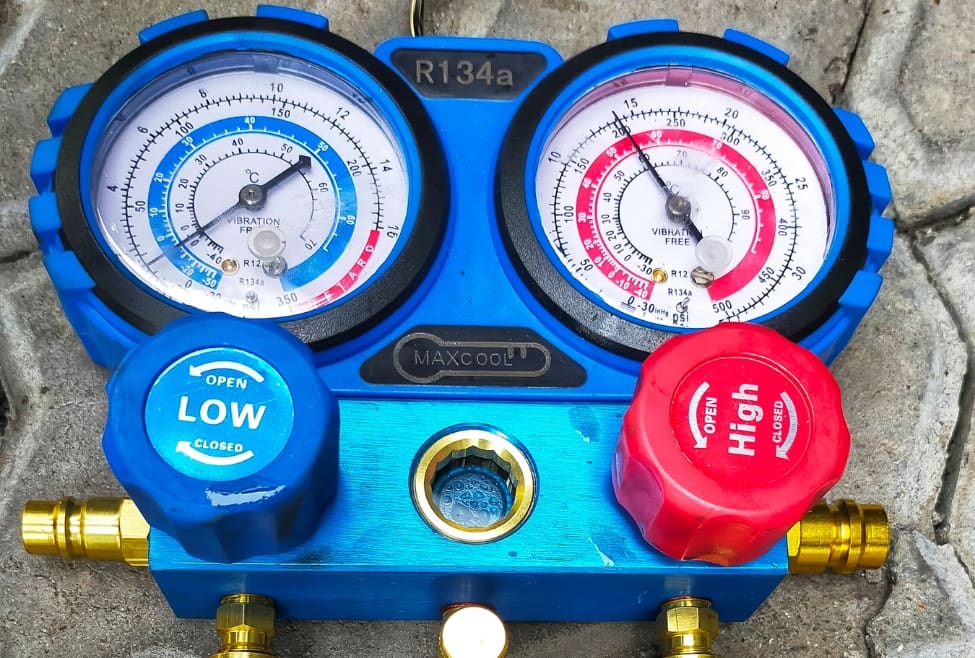
Step 1: System Pressure Testing
Technicians measure refrigerant levels to confirm imbalance.
Step 2: Leak Detection
Special tools are used to locate where refrigerant is escaping.
Step 3: Repair or Seal
The leak source is repaired—this is the most important step.
Step 4: Vacuum and Recharge
The system is evacuated of air and moisture before refrigerant is added to manufacturer specifications.
Step 5: Performance Testing
The system is checked for proper cooling, airflow, and pressure balance.
Without these steps, refrigerant problems will keep returning.
Why Low Refrigerant Should Never Be Ignored
Low refrigerant doesn’t just reduce cooling—it stresses the entire system.
Long-term risks include:
- Compressor overheating
- Frozen evaporator coils
- Higher energy bills
- Reduced system lifespan
- Repeated breakdowns
The AC compressor is especially vulnerable and is one of the most expensive components to replace.
A Simple Way to Think About It
Instead of asking “How do I add refrigerant?”, a better question is:
“Why did my system lose refrigerant in the first place?”
That shift in thinking leads to the correct fix: leak detection and repair, not repeated refills.
Preventing Future Refrigerant Problems
While leaks can happen over time, regular maintenance helps reduce the risk.
Helpful prevention steps include:
- Annual HVAC maintenance service
- Cleaning evaporator and condenser coils
- Checking refrigerant pressure during tune-ups
- Inspecting refrigerant lines for wear or corrosion
- Keeping airflow unobstructed
Preventive care is often the difference between a small repair and a major system failure.
Lochard HVAC, Plumbing, and Service provides professional AC repair, refrigerant leak detection, and HVAC diagnostics throughout Piqua, Troy, Sidney, Bellefontaine, Celina, and Wapakoneta, OH.
What to Remember About Low AC Refrigerant Issues
Understanding how to add refrigerant to your AC is really about understanding why refrigerant problems happen in the first place. In almost every case, low refrigerant is a symptom—not the root issue.
Airflow restrictions, system leaks, or mechanical wear are usually the real cause, and addressing those directly is what restores long-term cooling performance.
When to Take the Next Step
If your system is struggling to cool, Lochard HVAC, Plumbing, and Service can help with detailed AC diagnostics, refrigerant leak detection, and HVAC repair services designed to restore proper system performance without guesswork. Contact us today!